
Shein is gearing up for a potential initial public offering (IPO) in London. Valued at approximately £50bn, this IPO is set to be one of the most notable and controversial entries into the UK capital market in recent years.
The news, reported by Sky News earlier in June, indicates that Shein’s flotation could be the largest in London for over a decade.
Initially, Shein had its sights set on a New York listing. However, political challenges and regulatory hesitations have dampened this plan. If Shein proceeds with the London IPO, it aims to raise over £1bn by selling new shares to investors. While this amount is substantial, it pales in comparison to the company’s overall valuation. Shein’s last funding round in early 2023 valued the company at £50mn or $66bn.
Sky News revealed that Shein, originally founded in China and now headquartered in Singapore, is on the brink of submitting a prospectus to the Financial Conduct Authority (FCA) for approval.
While the filing does not guarantee a London listing, it is a significant step towards that goal. The final decision will depend on consultations with fund managers and UK listing authorities.
Shein, established in China in 2012, operates in more than 150 countries with a user base of 150mn people. Its popularity surged during the COVID-19 pandemic and has continued to rise.
The brand’s strategy of offering a vast array of affordable clothing, bolstered by social media influencer campaigns, has made it a favourite among Gen-Z consumers. Shein’s rapid production model allows it to introduce new items in weeks.
Despite its success, Shein faces intense scrutiny over its environmental impact and labor practices. Allegations of forced labor and the use of cotton from China’s Xinjiang region have sparked significant controversy. These issues have been a focal point for US lawmakers concerned about Shein’s connections to China. Shein’s extensive supply chain, reliant on thousands of third-party suppliers and contract manufacturers near Guangzhou, China, has been a particular point of contention.
In May, an investigation by Swiss advocacy group Public Eye highlighted ongoing labour abuses among Shein’s suppliers, with some workers reportedly clocking 75-hour weeks despite promises of improved conditions. Shein responded to the BBC, stating it is “working hard” to address these issues and has made “significant progress on enhancing conditions”.
However, many are unconvinced. Among those that have criticised the IPO plans are Caroline Rush, chief executive of the British Fashion Council. She said, as quoted by industry media: “At a time when global fashion leaders are rightly focused on making our sector more socially, environmentally, and economically sustainable, the government’s courting of Shein to list on the London Stock Exchange, and Shein’s decision to do so, is of significant concern to UK fashion designers and retailers.”
In the meantime, I’m conducting an experiment to see if Shein’s clothes really are disposable, or if they stand up to multiple washes and wears.
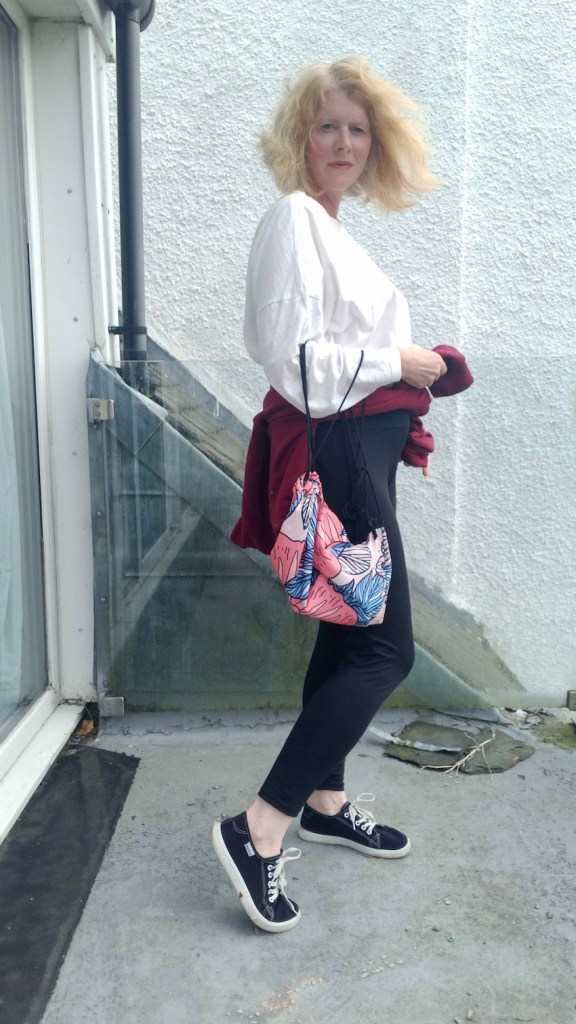
Today I wore:
DAZY Solid Drop Shoulder Tee – 7 wears
Women’s Solid Color Basic Daily Leggings – 3 wears
Burgundy hoodie (thrifted) – 6 wears
Beige trench coat (thrifted) – 5 wears
2024 New Style College Wind Black & White Outdoor Sports Shoes for Women – 9 wears
Allover Leaf Graphic Drawstring Backpack – 2 wears
DAZY Women’s Floral Print Sleeveless Round Neck Sleep Dress – 9 wears
Fashionable Color-Block Lingerie Set, bra – 2 wears
3pack Lace Trim No Show Brief, grey – 3 wears
 Fashion Slowdown
Leave a comment