
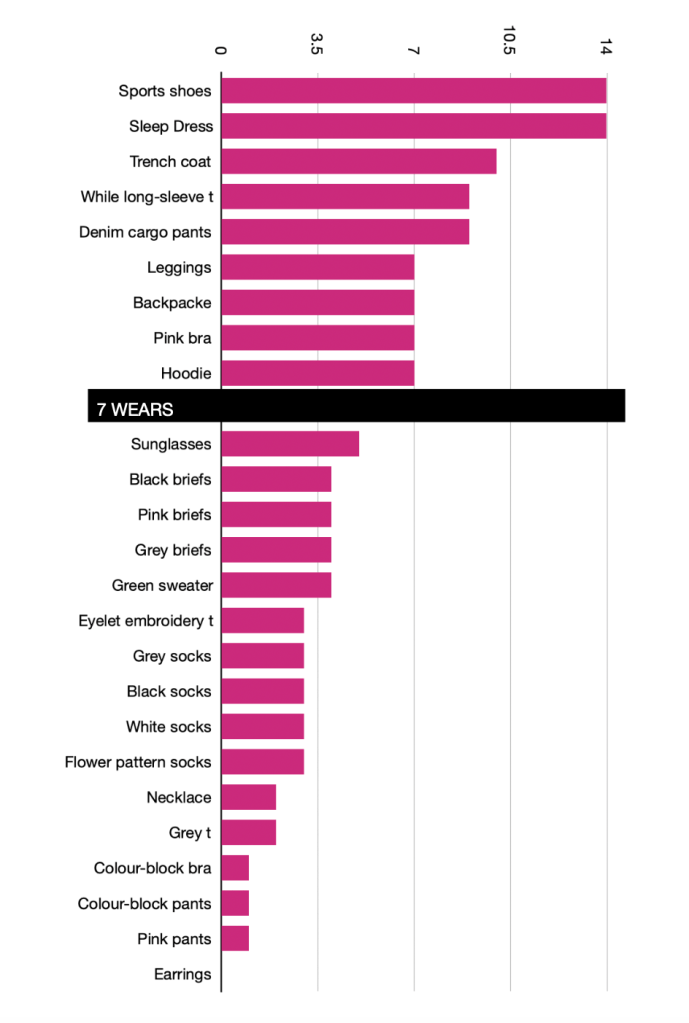
I’m more than two weeks into my 90 days of Shein challenge, intended to find out whether fast fashion really is disposable, and there are several items that I’ve worn more than seven time — something worth mentioning because one study shows that the average newly purchased garment is worn a total of only seven times.
In a world where fast fashion dominates and trends change at lightning speed, it’s easy to fall into the trap of the “barely wear” culture. That means purchasing a new piece of clothing, wearing it a few times, and then relegating it to the back of your closet, never to see the light of day again.
I found myself reflecting on this as I reached for my denim wide-leg trousers for the ninth time. That’s two more than the more seven wears that, according to a study commissioned by the charity Barnados in 2015, is the average a newly purchased garment is worn. And if anything, that figure has likely decreased since then.
The study, which surveyed 2,000 women, uncovered some alarming trends in our relationship with clothing. It revealed that a third of women consider clothes old after wearing them only three times, with the average woman spending a staggering £768 a year on clothes that often languish in wardrobes unworn.
But what drives this phenomenon? The reasons vary, from changes in weight to impulse purchases that lose their allure after a few wears. Social media also plays a role, with platforms like Facebook, Twitter, and Instagram influencing perceptions of outfit repetition. Being photographed in the same dress on different occasions is deemed a fashion faux pas, pushing women to constantly seek new pieces to stay ahead of the curve.
Dresses purchased for one-off events, like weddings or holidays, are among the most discarded items. The average woman buys clothing every 89 days, spending £64 per month, yet a significant portion of these purchases ends up gathering dust or being swiftly discarded.
But it’s not just about the financial and environmental costs of our shopping habits. There’s an emotional toll too. Many women confessed to feeling disenchanted with their clothes after just a couple of wears, citing weight fluctuations or buying items on sale as common reasons for abandonment.
So, what’s the solution? How can we break free from the “barely wear” culture and cultivate a more sustainable and fulfilling relationship with our wardrobes?
Firstly, we need to reconsider our approach to shopping. Instead of chasing fleeting trends, let’s prioritise quality over quantity. Investing in timeless pieces that can be styled in multiple ways ensures longevity and versatility in our wardrobes.
Secondly, let’s embrace the concept of conscious consumption. Before making a purchase, ask yourself if you truly love and need the item. Will it bring joy and utility to your life beyond a few wears? If not, perhaps it’s best to walk away.
Thirdly, let’s challenge the notion that outfit repetition is taboo. Instead of shunning clothes after a couple of wears, let’s celebrate their versatility and embrace the concept of “rewearing” with pride. After all, true style is about confidence and self-expression, not the number of new outfits in our closets.
I added new items to my closet for this challenge — actually more than I’ve purchased in years — but I’m committed to wearing every one of them dozens of times. Breaking free from the “barely wear” culture is a journey, but it’s one worth embarking on.
Today’s wears

DAZY Solid Drop Shoulder Tee, white
Women’s Solid Color Basic Daily Leggings
Burgundy hoodie (thrifted)
Beige trench coat (thrifted)
2024 New Style College Wind Black & White Outdoor Sports Shoes for Women – 15 wears
Allover Leaf Graphic Drawstring Backpack
DAZY Women’s Floral Print Sleeveless Round Neck Sleep Dress – 15 wears
3pack Lace Trim No Show Brief black
Fashionable Color-Block Lingerie Set, bra
DAZY Flower Pattern Crew Socks,
 Fashion Slowdown
Leave a comment