The reality of fast fashion’s plastic problem is far more pervasive than many consumers realise, according to the Fast Fashion’s Plastic Problem report by the Royal Society for Arts, Manufactures and Commerce (RSA).
It finds plastic is embedded deeply in the clothes we wear. After analysing over 10,000 recently-listed items from popular online retailers like Asos, Boohoo, Missguided and PrettyLittleThing (Shein isn’t included in the study), the 2021 report reveals nearly half of all garments sold on these platforms are composed entirely of new plastics.
These plastics – primarily petrochemical-based materials like polyester, acrylic, elastane and nylon – not only consume vast amounts of energy during production but also leave a lasting environmental impact.
These fabrics, “designed to be worn only a handful of times”, are part of a “throwaway culture” where garments end up in landfills, taking centuries or more to degrade, says the RSA. The report warns that while many fast fashion brands market their clothes as environmentally friendly, a significant portion of their offerings still relies on new plastic materials.
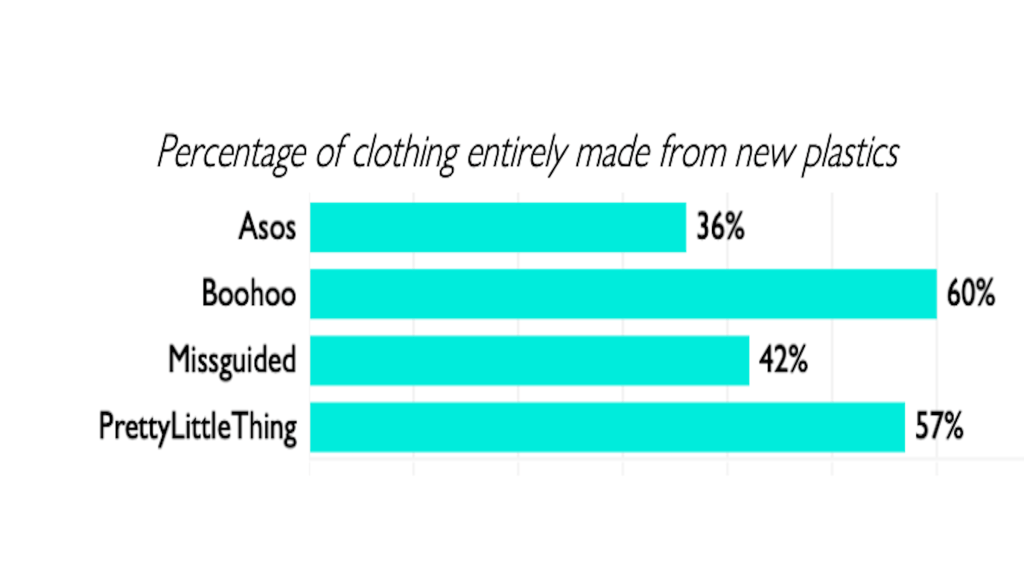
On average, 61% of the clothing listed across these brands contains plastic, with half being made entirely from petrochemical fibres. The numbers vary across retailers, with Boohoo and PrettyLittleThing leading the pack in terms of plastic reliance – 60% and 57%, respectively, of their items are made wholly from new plastic. Asos fares slightly better with 36% of its clothing being entirely plastic-based.
The percentage of recycled plastic used remains shockingly low, with only 3% of plastic-containing garments across all brands featuring recycled materials. Even among the more eco-conscious brands, like Asos, only 6% of their plastic garments use recycled components.
Beyond the sheer volume of plastic in these clothes, the environmental implications are severe. The production of polyester, for example, emits 20% more carbon dioxide than its cotton equivalent. In 2015 alone, global polyester production accounted for 700 million tonnes of CO2 emissions – the same as the annual emissions of an entire country like Germany. Additionally, petroleum-derived fabrics contribute to the growing problem of microplastic pollution, with millions of microfibres from synthetic clothing ending up in our oceans, rivers, and even the food we eat.
The RSA report also outlines several paths forward. One potential solution is implementing a “plastics tax” on virgin plastic clothing imported or produced in the UK. This would encourage brands to invest in alternative materials and reduce their reliance on fossil-fuel-derived fabrics. Further, the RSA suggests that fast fashion companies should explore second-hand clothing platforms and improve transparency by regularly publishing data on their plastic usage.
The RSA report co-author Josie Warden stresses that we must reframe how we think about our clothing. “We should see many of these items, which go for rock-bottom prices, as akin to other short-lived plastics,” she said. If we are to reduce fashion’s negative environmental impact, we must shift towards better design practices, reduced production scales, and more responsible consumer behaviours.
Everything I wore on Day 35 of the 90 days of Shein challenge:

SHEIN LUNE Women’s Batwing Sleeve Round Neck T-shirt, grey
Women’s Solid Color Basic Daily Leggings
2024 New Style College Wind Black & White Outdoor Sports Shoes for Women
Allover Leaf Graphic Drawstring Backpack
DAZY Women’s Floral Print Sleeveless Round Neck Sleep Dress
3pack Lace Trim No Show Brief, black
 Fashion Slowdown
Leave a comment