In today’s age of fast fashion, the allure of trendy, low-cost clothing is hard to resist. Yet a report from Vestiaire Collective reveals that these fleeting fashion pieces are much more costly than they first appear. As fast fashion dominates our wardrobes, it also dominates our landfills — an alarming 60% of fast fashion items are discarded within a year of purchase.
Vestiaire Collective’s Circularity Reports tressed the importance of cost-per-wear; a simple but powerful metric that evaluates the true value of an item. It is calculated by taking the purchase price of the item, subtracting its resale value, and dividing the result by the number of times the item is worn. When this formula is applied, the results are eye-opening: pre-loved clothing from Vestiaire Collective is on average 33% more affordable in the long run compared to brand-new fast fashion. In particular, a pre-loved coat is 64% cheaper per wear than a first-hand fast fashion alternative, and a preloved dress saves a whopping 72%.
The cost-per-wear metric underscores an important truth: fast fashion is not as cheap as it seems. The very nature of fast fashion — its focus on fleeting trends — means that garments are often worn less and discarded faster, argues the report. As a result, the real cost of fast fashion skyrockets over time. According to the report, the average fast fashion item is worn only 50 times before it’s discarded. In stark contrast, pre-loved items on Vestiaire Collective are worn an impressive 88 times on average, or 76% more than their fast fashion counterparts.
As Fanny Moizant, President and Co-founder of Vestiaire Collective, puts it, “This report sounds the alarm on fast fashion’s devastating impact and should be a wake-up call to all to end overconsumption and overspending.” She continues, “In today’s climate of inflation, it is obvious: neither people nor planet can afford fast fashion.”
Pre-loved fashion encourages us to value our clothing more, which in turn leads to longer wear and better care. In fact, Vestiaire Collective users hold onto their items 31% longer — an additional 1.4 years — compared to fast fashion consumers. This longevity is key to reducing waste and minimising the environmental footprint of our wardrobes.
The concept of the ‘upscale effect’ is another reason preloved is outperforming first-hand fashion. With preloved, shoppers can access high-quality, designer items at a fraction of the price they’d pay for new fast fashion, the report says. This allows consumers to elevate their style and invest in timeless pieces without overspending.
As the Vestiaire Collective report makes clear, by focusing on the true cost-per-wear of an item, consumers can make smarter, more sustainable choices that benefit both their wallets and the planet. In a world where overconsumption is wreaking havoc on the environment, shopping preloved is a tangible way to break the cycle of fast fashion and embrace a more mindful, economical approach to style.
Everything I wore on day 53 of the 90 days of Shein challenge:
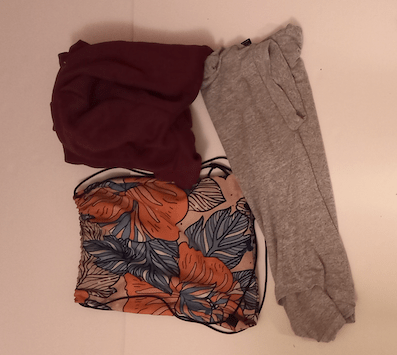
SHEIN LUNE Women’s Batwing Sleeve Round Neck T-shirt, grey
Burgundy hoodie (thrifted)
2024 New Style College Wind Black & White Outdoor Sports Shoes for Women
Allover Leaf Graphic Drawstring Backpack
DAZY Women’s Floral Print Sleeveless Round Neck Sleep Dress
Lace Flower Pattern Thin Underwear Set, bra and pants
 Fashion Slowdown
Leave a comment