
Reesearch from WRAP has shown that almost half (49%) of all used textiles in the UK are being thrown into the rubbish bin, with each person discarding an average of 35 items of unwanted textiles into general waste each year. The scale of this waste is staggering, with WRAP estimating that 711,000 tonnes of post-consumer textiles are sent to landfill or incineration annually, equating to nearly 30,000 shipping containers filled with discarded fashion and home textiles.
This is a critical issue for the UK, which buys more clothes per capita than any other European country, according to WRAP. Despite a temporary dip in textile consumption during the pandemic, consumption has now rebounded to near pre-Covid levels. In 2022 alone, the UK purchased 1.42 million tonnes of textiles, with a near equivalent 1.45 million tonnes of used clothing being passed on. However, too much of this is being wasted, contributing to an environmental disaster and a huge missed opportunity to support circularity within the fashion industry.
WRAP’s research highlights a “perfect storm” brewing within the textile reuse and recycling sectors. The combination of fast fashion and lower-quality garments flooding the market has led to a sharp decline in the value of recovered textiles. Between 2013 and 2023, the price per tonne of textiles collected from charity shops fell by 41%, while textile banks saw a 57.5% decline in value. This has severely impacted the income of charities and textile recycling businesses that depend on these revenues, leaving many struggling to survive in an increasingly challenging environment.
WRAP is calling for urgent action from brands, retailers, investors, and governments to support the textile recycling sector. “We’re all buying too many new items and then putting too many clothes in the waste-bin consigning them to landfill or incineration. These are valuable resources, not waste,” said WRAP CEO Harriet Lamb. She emphasized the need to divert textiles away from waste streams through alternative channels such as donations, resale, or repair, rather than sending them to landfills or incinerators.
One of the major barriers to achieving a sustainable textile system, according to WRAP, is the insufficient infrastructure to manage the sheer volume of clothing being discarded. Much of the UK’s textile collection infrastructure, which has existed for generations, is at risk due to the increasing challenges posed by fast fashion and declining prices in the second-hand market. Without immediate intervention, the expertise and capacity built up over decades could be lost. “The UK is fortunate to have an existing infrastructure for textile collections that’s existed for generations. To risk losing their knowledge and expertise would be a tragedy,” said Lamb.
To tackle this crisis, WRAP is urging policy intervention at multiple levels, including the introduction of Extended Producer Responsibility (EPR) schemes, product standards that prioritize durability, and a shift towards circular business models. In addition to legislative action, WRAP stresses the need for investment in textile recycling infrastructure to ensure that the sector is equipped to handle the volume of clothing that could otherwise end up in landfill or incineration.
Echoing these concerns, Alan Wheeler, CEO of the Textile Recycling Association, highlighted the precarious position of the global used textiles industry, which is facing a “dire situation” due to oversupply and diminished demand. He stated, “We are also in a current situation where the global used textile industry is in a dire situation… This current situation coupled with the findings of the new Textiles Market Situation Report show why we need serious interventions and support from government and industry.”
The case for change is clear. To prevent further harm to the environment and support the UK’s transition to a more sustainable and circular fashion economy, WRAP emphasizes that we all have a role to play—from policymakers to retailers, and from consumers to investors. By embracing a new model for fashion—one that values durability, supports reuse, and reduces waste—we can ensure that our clothing has a second life rather than being consigned to landfill.
In the words of Harriet Lamb, “We should be giving to charity shops who rely on the income, selling on e-commerce, repairing or sharing – anything but the bin!”
Everything I wore on Day 55 of the 90 days of Shein challenge:
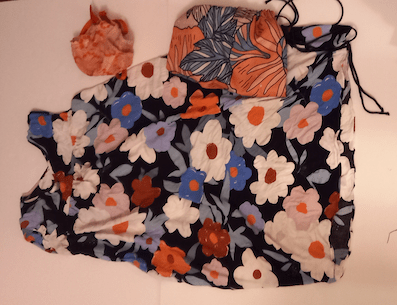
Allover Leaf Graphic Drawstring Backpack
DAZY Women’s Floral Print Sleeveless Round Neck Sleep Dress
Lace Flower Pattern Thin Underwear Set, bra
And just like yesterday, another almost total fail…
 Fashion Slowdown
Leave a comment